For more than three decades, Michael Keck has built a career not by chasing titles or personal accolades, but by quietly shaping people, relationships and systems within one of the restaurant industry’s most influential foodservice equipment dealers.
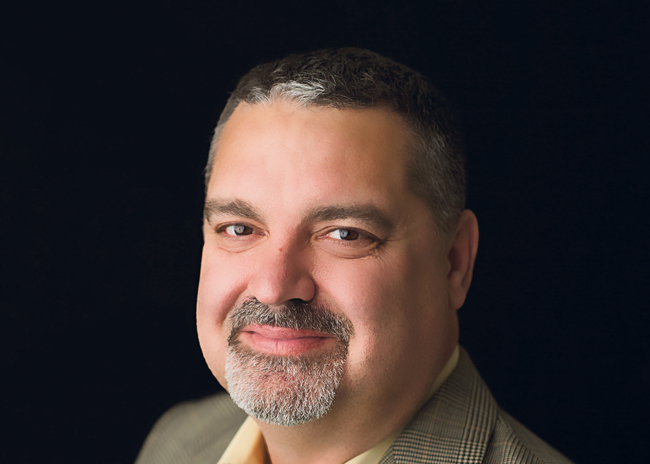 Michael Keck, president, Concept Services, Austin, TexasAs president of Austin, Texas-based Concept Services Inc., Keck leads a company that operates behind the scenes of some of the nation’s largest multiunit restaurant brands — designing kitchens, sourcing equipment, managing installations and removing friction from the complex process of opening new locations.
Yet Keck quickly points out that his story is not one of a straight climb to the top. Instead, it is defined by risk, failure, self-reflection and a deeply personal philosophy of leadership grounded in service. “Back when I was 21 and first started at the company, I didn’t know anything about the industry,” Keck says. “I didn’t know what it consisted of. I didn’t know how people got restaurant equipment into their buildings.”
Today, he oversees a company of roughly 80 employees, has led industry-wide initiatives through his past role as chairman of the Foodservice Equipment Distributors Association (FEDA) and is widely regarded as a respected voice in the foodservice industry. But Keck’s journey began far from Austin — and far from boardrooms.
A Leap of Faith
Keck grew up in a small town in northeast Nebraska with a population of about 1,100 people. The closest stoplight was 45 miles in any direction. Opportunity was limited, and higher education didn’t unfold as planned. “I went to the University of Nebraska for two years, until the University of Nebraska politely asked me not to come back,” he laughs.
At 21, newly married and uncertain about his future, Keck received an unexpected invitation to interview with Hal Schroeder, the founder and CEO of Concept Services in Austin, Texas. He had never been to Texas and had only flown once in his life. “I figured I’d go to Austin and he’ll say no, and I’ll come home,” Keck says. “I’d at least get a free trip to Austin.” Instead, Schroeder offered him a job.
“We packed up everything we owned in the smallest trailer U-Haul made and moved ourselves to Texas,” Keck says. Concept Services at the time had just five employees. Keck joined as a salesperson — and struggled. “I wasn’t very good at it,” he admits. “And two and a half years later, he fired me.”
That career adjustment meeting at age 23 forced Keck into a period of recalibration. He worked a legislative session at the Texas Senate as Assistant Sergeant-at-Arms and stayed in touch with former colleagues at Concept Services. When the legislative session ended, he mentioned to his former coworkers he was looking for work.
“The next day, I got a call from Hal,” he says. “I was back in the Concept Services office on the following Monday.”
This time, Keck returned as a project manager — a role that better suited his strengths at the time. He worked on major accounts that helped elevate the company’s position in the market. “I managed a lot of projects. I worked on some very big accounts — accounts that really launched Concept Services into the position that we are now,” he says.
Discovering Servant Leadership
A few years later, when one of those major clients collapsed financially, Schroeder gave Keck a choice: Remain in project management or try sales again. “I said, ‘You know what? I think I want to give it a go again,’” Keck says. That decision to return to the sales world marked a turning point. He built a portfolio, launched his own department and gradually moved into executive leadership — vice president, senior vice president and eventually president in 2018.
Keck’s leadership style was not shaped by corporate training or business school. Instead, it emerged through personal struggle, mentorship and a deliberate effort to understand how leadership actually works. “I came from a small town in Nebraska. I was a naive kid,” he says. “The world was either going to be incredibly daunting, or it was going to be incredibly fun. I chose fun.”
But as his responsibilities grew, Keck realized he needed tools beyond instinct. A neighbor introduced him to leadership theory and faith-based teachings on service. Servant leadership, he explains, is not about being passive or soft. “Servanthood is giving people the things they need but not doing everything for them,” he says. “Doing everything for them is not serving anybody. I need to provide an environment where they can be successful.”
But Keck continued to find the leadership role challenging. One mentor gave him a blunt wake-up call. “I told him, ‘I can’t figure it out — these people I’m hiring can’t do anything right,’” Keck recalls. “He told me to get a good night’s sleep, wake up in the morning, look in the mirror and I’d discover the problem.”
That moment changed how Keck approached leadership. “I needed to work on me and how I was going to behave and respond to people,” he says. “It changed my outlook completely.”
At the heart of Keck’s leadership philosophy is consistency between words and actions. “You can say what you want, but if you don’t do what you say, your integrity is shot,” he says. “Your words need to match your behavior.”
This principle extends to how he treats vendors, manufacturers’ reps, service agents, clients, competitors and even people he can’t directly serve. When individuals approach Concept Services with needs outside its business model, Keck doesn’t simply turn them away. “I ask them a lot of questions. I find out what they want, what they need,” Keck says. “And I say, ‘I think I know somebody.’ And I’ll call one of my competitors who does that kind of work, and I’ll say, ‘Can you reach out to this person, and this is what they need.’ I do that with no expectation of anything in return.” That mindset, he believes, frees people from transactional thinking.
After nearly four decades in the industry, Keck has faced his fair share of defining moments. One of the most consequential came during his tenure as chairman of the board for FEDA, a role he held from 2020 to 2022 — coinciding almost exactly with the height of the COVID-19 pandemic. “We were one of the first associations
to bring our conference back after the pandemic,” Keck says.
For Keck, the issue went beyond logistics or liability. It was about the human fabric of the industry itself. “This industry is rooted in relationships,” he says. “We needed to get back together again. This whole community needed to be in front of each other, shaking hands and getting back to whatever normal was going to be at that time.”
Looking back, Keck views the decision as emblematic of leadership in moments of uncertainty — balancing responsibility with courage and recognizing when people need connection as much as protection. “In that moment, bringing people together wasn’t just about business,” he says. “It was about reminding ourselves that we’re still a community.”
Measuring Success Differently
Despite his executive title, Keck defines success not in revenue or growth metrics but in the people around him. “My key accomplishment is watching other people succeed,” he says. “I’m more fulfilled by that than getting more business.”
Keck says he finds joy in mentoring employees, seeing them grow and even watching them leave to pursue new opportunities. “I’ve had several people go on to do other things,” he says. “I get to say I played a small role in their success.”
At some point, Keck realized his place in the industry had shifted. “When I got here in 1989, I was the kid,” he says. “Now I’m the old guy. I don’t know
when it happened — it comes faster than you think.” Today, he serves as a connector and a mentor to others.
Keck’s approach to mentorship reflects his belief that people learn best through narrative. “My style of teaching always comes with a story,” he says. “A metaphor, a parable.” He credits this to observing how faith leaders communicate. “If you really want someone to remember something, don’t lecture them. I don’t tell them what to do. I try to teach them how to do it,” he says. “Teach with a story. That story becomes something they can relate to, learn from, apply and remember.”
From a five-person startup to a national platform, Keck has watched Concept Services evolve into a company that eliminates complexity for restaurant brands. But his personal mission remains rooted in people, not process. In an industry defined by speed, scale and systems, Keck’s leadership stands apart — quietly proving that service, humility and human connection remain the most powerful tools of all.
“It’s about integrity. It’s about helping,” Keck says. “It’s about relationships.” And while he now holds one of the industry’s most visible leadership roles, Keck still sees himself the same way he did decades ago — curious, learning and grateful.