Never one to resist taking on new challenges, Michael Berard, FCSI, always looks for opportunities to serve the hospitality industry as well as his country. Berard is incredibly detail oriented and uses the information he diligently gathers about a project or life situation to make clear decisions in the best interests of everyone involved.
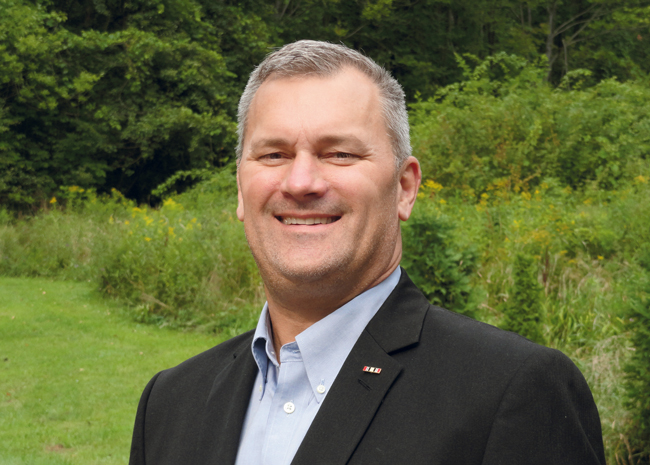 Michael Berard, president, Commercial Kitchen Consulting, Frankford, Del.That’s why when Berard speaks, people listen. His commanding presence and inquisitiveness set the tone for meeting any challenge that may lay ahead. A man of strong principles, Berard believes you should treat others the way you want to be treated and always be respectful and compassionate.
These traits are the collective result of a lifetime of experiences that include being a young athlete, serving in the military for more than three decades, learning draftsman skills and building a much-admired 17-year-old foodservice consulting business, Commercial Kitchen Consulting LLC (CKC). CKC places strong emphasis on designing commercial kitchens for K-12 schools, grocery stores, colleges, hospitals, nursing homes, restaurants, bulk food production kitchens, and correctional and government facilities.
Berard has a well-earned reputation for being very conscious of his clients’ needs and for making sure he does what’s in the client’s best interests. “Being a small business owner, he gives a lot of one-on-one time to his clients, helping them work through whatever challenges they face,” says James Camacho, FCSI, CSI, president, Camacho Associates, Atlanta. “He recommends other consultants to take on projects he doesn’t feel he can take on without compromising the highest level of professionalism. He takes pride in whatever he does. That is why he is admired even by his competitors.”
Long active in FCSI, Berard served on its Council for Professional Standards alongside Christine Guyott, FCSI, RDN, executive principal, Rippe Associates Inc., Minneapolis. “I was impressed by him from the start,” she says. “Mike has a level of calmness. He thinks logically and demonstrates the no-fuss decision making that he learned, at least in part, in the military. He’s very practical and is a valuable contributor to this organization.” Guyott encouraged Berard to run for a seat on FCSI’s board of trustees, which he did and won.
These much-deserved compliments from fellow professionals begin to paint a picture of a man who wants his projects and anything else he becomes involved with to better the lives of his clients, their constituents and his colleagues. Placing a lot of emphasis on volunteering in organizations, Berard also is a past member of the New York School Nutrition Association, and current member of the Marine Corps League and the Architectural Review Committee (ARC) in his homeowners association.
The Early Years and Into the Military
Following the lead of a couple of his high school buddies who joined the United States Marine Corps, Berard took the tests and enlisted in March 1977. He earned the rank of Sergeant and remained on active duty in the Marines for four years. After he was discharged, Berard attended Fulton-Montgomery Community College in Johnstown, in upstate New York, where he earned an AAS in construction technology.
In 1983, shortly after graduation, Berard joined the Navy Reserves as a Seabee, a position he held until retiring in 2010, earning the rank of Chief Warrant Officer Four (CWO4).
At the same time Berard was serving in the military, he took a job at Binghamton University as an architectural draftsman and project manager. While living in Binghamton he earned a B.S. in industrial technology in 1995 at Binghamton University.
In 1984 Berard accepted a job as an architectural draftsman with a small company, Prescott Pearson. It’s a position he would hold for eight years. Berard’s next ventures took him to Bassett-Carragher Associates, and later to Keystone Associates LLC, an architectural firm in Binghamton, N.Y.
In 2002, while working for Fetech, a foodservice consultant in Syracuse, N.Y., he was deployed in support of Noble Eagle, an ongoing defense mission, and was again deployed in support of Operation Iraqi Freedom in 2008, stationed at Camp Fallujah, Iraq. At Camp Fallujah, he served as an area construction engineer with the 1st Marine Expeditionary Force in charge of $50 million construction projects.
During his time in the military, Berard earned many prestigious medals and awards. It was during his deployment that he also made some decisions that would profoundly shape his future. “You tend to soul search in a war zone. I decided to eventually become a foodservice consultant,” he says.
In 2009 that vision became a reality when he started CKC. The company qualified as a Service-Disabled Veteran-Owned Business (SDVOB). In order to qualify as a SDVOB, the business must be at least 51% owned and controlled by one or more service-disabled veterans, meet Small Business Administration size standards and get certified through the SBA’s Veteran Small Business Certification program. The veteran must have a service-connected disability, manage daily operations and make long-term decisions.
Leading a Company
Not one to pass up opportunities to learn and develop, Berard brings a wealth of knowledge to each project. “What goes around comes around,” he says. “If you work hard and strive to provide a quality consulting service, you’ll be successful. For example, there are times when a project goes outside the scope of work and time frame you anticipated. If you go that extra mile on one project, another job with the same team may well come around again.”
Learning to debrief after every project also contributes to Berard’s success. “In the military, after every mission, we’d sit down and talk about the pros and cons of everything that happened. We do that now with foodservice projects. We write down what worked and what surprises we found, like the numbers changing on manufacturers’ products or issues with laminates. No detail should be overlooked.”
Berard says CKC’s projects focus on sustainable practices by promoting more environmentally friendly equipment concepts such as fully integrated kitchen ventilation system solutions and heat reclamation systems. Such features can help a project achieve LEED certification from the U.S. Green Building Council. CKC also focuses on ergonomically proficient workstations and kitchens promoting positive work environments. “This is accomplished through the use of quality materials, fit and finish, color, lighting and cleanability,” Berard says. “The end result is a long-lasting sustainable kitchen that also promotes staff recruitment and retention.”
As Berard nears retirement, he and his wife Lisa will spend more time enjoying outdoor life in Delaware, which includes hiking, walking the dog, and watching eagles, egrets, ducks and geese at the creek outside their home. They plan to travel to Italy, Ireland and other countries. They’ll also travel to North Carolina to visit their daughter, son-in-law and new grandchild and son. “I’ve held two full-time jobs — in the Reserves for more than 32 years and consulting for a long time — so this will be a much-appreciated change,” Berard says.
As it’s Berard’s nature to keep busy, he’ll also volunteer for veterans’ and other organizations and continue to mentor young professionals. His hope for the hospitality industry, FCSI and other organizations is that they continue to attract young professionals who care about education, training and high standards. “We’re all in this together,” he says.