Headquartered in Berkshire, England, MCFT’s footprint goes even further with branches in about a dozen countries in Europe, the Middle East and Asia. It’s an unusual business for the service sector, led by an individual with an unusual background for the foodservice industry, George Roberts-Smith, group CEO of MCFT.
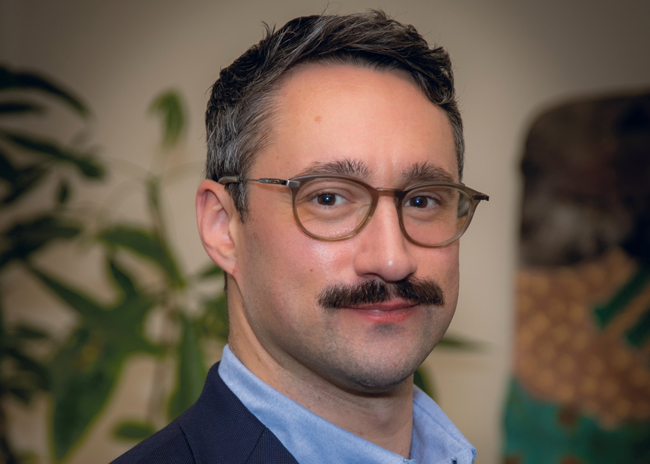 George Roberts-Smith, Group CEO, MCFT, Berkshire, EnglandIn the spring of 2012, Roberts-Smith had finished his master’s degree in engineering and was planning to start working on a Ph.D. in the fall, with a focus on machine learning and artificial intelligence. Needing to earn some money over the summer, he took a temporary dispatcher job at MCFT, a 30-ish person service agency. The company’s owner, Chris Craggs, was quickly impressed with Roberts-Smith and started talking to him about joining the firm full time.
Roberts-Smith wasn’t convinced about the job at first, but he soon became intrigued. Having worked primarily minimum-wage jobs up to that point, he was used to people simply clocking in and out. At MCFT, though, the employees actually wanted to be there. That attitude was instilled by two elements of the company culture, he says: a desire for the firm to be the very best version of a service agency possible, and high expectations for employee performance.
“For me, that’s the kind of culture a lot of people are looking for. How do you be the best version of yourself? And if you’ve got an organization that wants to do the best and is going to help people get there and be uncompromising about it, then you can grow in that kind of environment,” Roberts-Smith says. He then walked away from his Ph.D. program and joined MCFT, eventually rising to group CEO in 2023.
Roberts-Smith started, however, as a business improvement specialist, at least officially. In reality, though, he wore several hats, from software development to dispatching to strategic planning. In this role he was deeply involved in the company’s decision to go international. That expansion was driven by the type of growth it wanted to pursue. The firm didn’t want to start servicing other types of equipment like elevators or fire suppression systems, so growth had to come through geography. Once it had the U.K. covered, going abroad was the next natural step.
MCFT initially explored a move to other European countries, but eventually selected Dubai in the United Arab Emirates as its first overseas location, which created MCFT UAE. Hotel construction there was booming, and manufacturers’ representatives were telling the firm that many of their brands were having trouble getting equipment serviced in that market.
MCFT seized the opportunity by sending Roberts-Smith to Dubai in 2014 to build a new branch.
As head of this new location, Roberts-Smith was charged with basically all operations, including hiring a tech or two to start, sales, accounting and developing relationships with manufacturers in that territory. It was slow going at first, he says, but in year two the branch signed a service contract with a major coffee chain. That gave the MCFT UAE branch credibility and momentum to develop into a successful business.
This approach has been the model for all MCFT’s international locations: Identify a market and match that market with a talented young leader. There’s very little downside to this approach, since MCFT isn’t gambling with an established business, Roberts-Smith explains.
“If you want to bring on these talented individuals, you obviously have to have something exciting for them to do. If we’ve got a static business and we’re just trying to run it as-is for a long time, that’s not a compelling proposition for people. If you say, ‘Hey, you could set up and run your own business in a different country in a couple of years’ time,’ then that’s obviously gonna pique the right people’s interest,” Roberts-Smith says.
Over the years, MCFT’s international strategy has led the company to tremendous growth. From the 30 or so employees when he joined the firm, MCFT now has approximately 550 employees in about a dozen countries. Though the company doesn’t rule out acquisitions, all this growth thus far has been organic, Roberts-Smith states.
MCFT’s global footprint offers more benefits beyond sheer size. One is stabilization. Growth in one country often offsets a slowing economy in another, Roberts-Smith says. In addition, working with different manufacturers in different markets expands MCFT’s combined knowledge base. “If we see a piece of equipment we haven’t seen before, it’s quite likely someone in the organization will have heard of it or seen it, so we can generally use that network to our advantage,” he says.
More Growth
Last year, MCFT’s training initiative got a boost with the opening of a dedicated facility. Comprising 8,500 square feet, this space includes offices, classrooms and spaces for hands-on equipment training.
This space now plays host to the company’s Technical Academy, a 24-month apprenticeship program in foodservice equipment maintenance and repair. Apprentices focus on one of three tracks: cold side, hot side or training for emerging leaders.
Most trainees join the program with no knowledge of how refrigeration and hot-side equipment work, so they start with three months of classwork, where they learn the basics, including an introduction to the supply chain side, safety fundamentals and baseline technical knowledge. They then spend most of the next 21 months in the field, working one-on-one with a dedicated coach prior to a final review and assessment.
“We take a lot of people through that training academy. They’re working in a factory or working in a supermarket, and three to four years into [our training] program, they’re buying a house, they’re getting married, they’re having kids, they’re living a life that they wouldn’t necessarily have lived without them coming into this industry. And that’s not just because MCFT is so great, that’s because we’ve shown people that this industry is a place where you can really make a career. We’re not doing this for altruistic reasons. We’re doing it because we want to keep growing our business. It just so happens that it works well for both sides,” says Roberts-Smith.
This commitment to training undoubtedly connects to Roberts-Smith’s involvement with the Commercial Food Equipment Service Association (CFESA). He is a past board member of the organization and currently chairs its Advisory Board and sits on its Education and Training Committee.
The company’s involvement with CFESA goes back years and is partly due to the lack of a similar organization in the U.K. Rather than trying to rebuild the wheel, Roberts-Smith sees more value in bringing what CFESA offers to his home country and beyond, such as training materials and certification standards.
Naturally, then, Roberts-Smith has helped build connections between the equipment and supplies sector around the world and in the U.S. These efforts have contributed to significantly more international involvement with CFESA, including higher attendance at CFESA conferences and gatherings. These international attendees, he notes, voice a recurring theme: Industry challenges cross borders. “One of the things that people always say is, ‘Oh, I didn’t expect that everyone has exactly the same issues,’’’ he says. “ It’s true, right? I’m sure people come from different countries and speak to the folks at The NAFEM Show, and they say, ‘Oh, right, you’re dealing with the same stuff, and we can work together to try and make progress in these areas.’”
In his work on the Advisory Board and Education Committee, Roberts-Smith has earned a reputation as an outstanding big-picture thinker who’s always willing to share knowledge.
Looking ahead, he expects the rise of internet-connected equipment to impact what service agents are asked to do. While traditional mechanical repair and maintenance is the core function of service companies today, in the future these firms may also have to diagnose and resolve network connectivity issues. He’s already experiencing this in some of MCFT’s branches.
“In our Middle East businesses, we have a couple of guys who are network technicians because there is quite a bit more connected equipment over there,” Roberts-Smith says. “[They] can go out and connect this stuff and set up networks and do various other bits and pieces. That will become absolutely standard, a normal part of installation.”
If given access to the data from this connected equipment — a big if, he says — service agents should be able to remotely diagnose many equipment failures remotely.
In turn, this new diagnostic capability will likely change how service calls are provisioned.
What almost certainly will not change, though, is the role of the service technician and, by extension, the company that technician works for, says Roberts-Smith.
It’s a reassuring insight from someone who was heading toward a career in artificial intelligence research before getting bit by the service bug. “AI has already and will continue to change so much about how we work, but in the short term, it’s not going to change the fact that a tech needs to go out and fix a piece of equipment,” he says.