Some years back, I started noticing a trend at my local coffee shop. More people were ordering their caffeinated drinks iced. In the middle of winter. When temperatures barely made it above freezing. What I thought was just a passing fad has now proven to be a member of the mainstream. And it’s not just coffee that’s chilled out. Cold beverages of all kinds are, well, hot.
“The biggest trend we’ve seen in cold beverages is just how popular they have become,” says Mike Kostyo, vice president of Menu Matters. “Cold beverages have been overtaking hot beverages for years. Now, many younger consumers exclusively drink cold beverages, across day-parts and seasons. That’s a big change when you consider how hot coffee had been the most popular beverage in America after water for decades.”
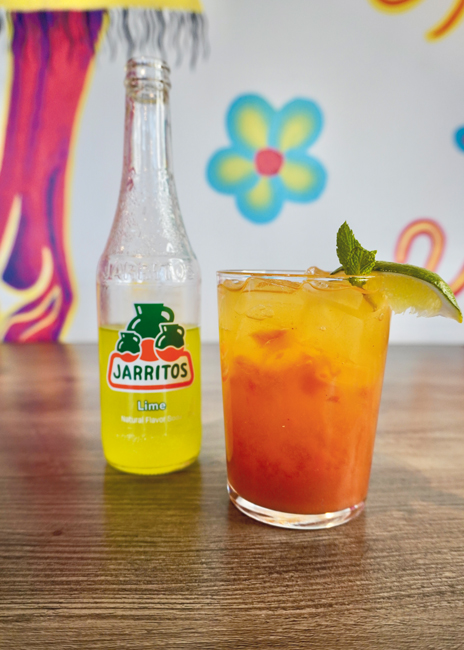 Fat Rosie’s Taco & Tequila Bar leans into its Mexican roots to create handcrafted dirty sodas with Jarritos Mexican sodas.The demand for creative cold beverages hasn’t gone unnoticed at the University of Pittsburgh. “Beverages are no longer just thirst crunch quenchers,” says David Krisell, resident district manager at the University of Pittsburgh. “They’ve become experience-driven menu centerpieces.”
International food and beverage trends are leaving their mark, too. “When we look at the data in our student surveys, what we’re hearing from different student voices, especially with the upcoming generations on campus, is that global flavors are really big in what they’re looking for,” says Maggie Weaver, senior marketing director at the University of Pittsburgh. “There’s a big appetite for global flavors right now.” In the dining program that translated to requests for things like pho or ramen and in the beverage sector, boba tea rose to the top of students’ must-have list.
Boba Draw
In response to that call for boba from students, the university opened Happy Boba this past January. The cafe took over a more traditional coffee bar on the second floor after another coffee spot was added to the first floor during a renovation. Coffee remains a big draw at the university, with at least a half dozen coffee bars across campus. There is a juice bar as well.
Happy Boba’s menu offers a range of signature and build-your-own cold beverages, including Thai milk tea, brown sugar milk tea, classic black and green teas, matcha milk tea, and oat milk options, as well as strawberry, peach and mango flavors. Additionally, the menu features smoothies, frappés and a variety of lemonade-based slushies, including one with strawberry yogurt and boba pearls. A limited-time offer rounds out the curated menu, with the first one being a cookies and cream frozen frappé. “We are planning on rotating them seasonally,” says Krisell, adding that there are some summer fruit flavors in the works. “We have a calendar for them, and we’ll do some fun things.”
Krisell says the boba tea trend has impacted schools across the country. “This is my sixth college,” he says. “I’ve worked in the Southeast, West Coast and up in the Pacific Northwest, and bobas in general are trending everywhere. Even at a school that I worked in Tennessee, we ended up doing bobas there too.” And it’s not just students, says Krisell; he admits that anytime he and his wife go to the mall, she has to get a boba.
One way the university sets its boba teas apart is via its tapioca pearls, which are made in-house by the culinary team utilizing a rice cooker. “Students want to see us being different from other boba locations,” says Weaver, adding that making as much from scratch as possible is a goal at the school.
Customization has become Happy Boba’s most popular order among students. “About 90% of our orders are build-your-own,” says Krisell, noting levels of sweetness, flavored syrups and types of pearls as leading items. Protein powder from a local purveyor is also available as an add-on at the university. “I saw a student order a drink with very little pearls, and then right after, I saw another student get three different boba pearls. It allows you that freedom to do what you want and get something new almost every time you go.”
Along with that customization comes that ever-important photo op. “Students really latch onto those things that are fun — and fun to share on their own social media pages,” says Weaver, which means drinks not only have to taste good, but look good, too.
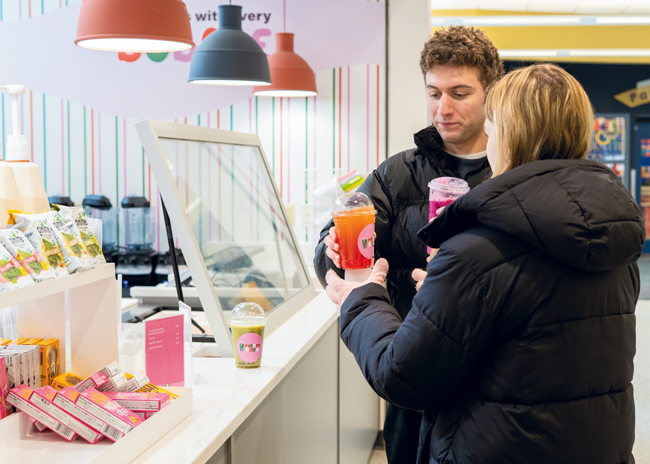 The University of Pittsburgh opened Happy Boba in January after students indicated boba and cold beverages were high on their must-have list.
Macro Trends
At CAVA, the fast-casual Mediterranean restaurant that has some 400 locations across the country, being “good for you” gets added to the mix for both food and drinks. “We’re seeing cold beverages follow the same macro trends that are shaping food,” says Ted Xenohristos, co-founder and chief operating officer at CAVA. “Cold beverage trends are all about balancing fresh, functional, flavorful and visually engaging experiences.”
CAVA crafts its beverage menu around approachable, well-loved flavors reimagined with a Mediterranean twist. Drinks include tangerine Aleppo, blueberry lavender, cucumber mint lime and classic lemonade. Iced teas and canned flavored waters round out the drink offerings.
Like its food, made-in-house ingredients play an integral role in CAVA’s beverage offerings. “If you stopped by any of our restaurants in the morning, you’d see the team slicing whole pineapples and blending them with generous sprigs of fresh mint,” Xenochristos adds. “You’d see loose-leaf tea carefully steeped in boiling water, then cooled and poured into our bubblers — never from a premade concentrate.”
Using fresh ingredients has another benefit besides vibrant flavors. It gives CAVA the flexibility to evolve with the seasons. “The lineup is bright, fresh and intentionally designed to complement our food,” says Xenohristos. “Each juice and tea stands on its own, but we also love seeing guests mix and match to create their own custom blends. It’s all part of the experience — we want it to be not just delicious, but interactive and fun.”
Data backs up CAVA’s strategy. According to a 2025 report from Datassential, 74% of operators say menu customization has become more important to customers.
Dirty Sodas
Dirty sodas burst onto the mainstream thanks to its viral popularity on TikTok. The mix of soda, coffee creamer, flavored syrups and other add-ons first debuted in 2010 in St. George, Utah, at a small drive-thru operation. Dirty sodas, a sweet treat, quickly took off, both at operations dedicated to them and at quick-serve restaurants.
In Chicago, family-owned Johnny’s Dirty Soda features flavors like King Coco (Coke, coconut, vanilla, coconut cream), Glow Up (Fanta, vanilla, cold foam) and Shenron (Mountain Dew, lime, pineapple). Fried chicken concept Minnie Bird, which has three locations in Illinois, offers dirty sodas with flavor options, cream, purees, pearls, foam, energy boosts, and candy toppings like Gummy Bears and Sour Patch Kids.
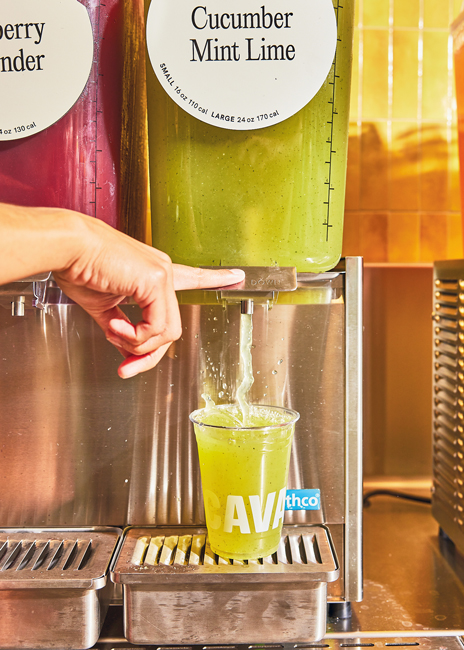 Fast-casual CAVA supports guests who want to make their own creative beverage blend from its beverage offerings.Then there’s Fat Rosie’s Taco & Tequila Bar, which has eight locations in Illinois and one under construction in Orlando, Fla., as well as seven Texas locations of its sister restaurant, Escalante’s. Beverage director Victor Tenorio has leaned into the restaurant’s Mexican roots for his versions of dirty sodas. Launched in November 2025, the four handcrafted dirty sodas blend Jarritos Mexican sodas and Dr. Pepper with syrups, purees and cream. “I grew up on Jarritos,” he proudly notes.
Tenorio uses his mixology background, including eight years at Fat Rosie’s, to create elevated versions of the popular beverage. The Creamsicle, for example, mixes Jarritos Mandarin with Madagascar vanilla and a splash of cream.
With all dirty sodas, ice is a vital component. “A drink with no ice is like a garden with no flowers,” says Tenorio. He plans to experiment with ice cubes infused with different flavors, such as hibiscus, as well as ones filled with flowers. Dry ice is also on his list for future drinks.
Kostyo also sees ice as an important component of dirty sodas. “It’s interesting to see how pebble ice became such a key part of the dirty soda trend, even driving demand for at-home pebble ice makers,” he says. “Ice has been a key part of cocktails for years, but there is still a lot of room for more ice innovation in the beverage category. We still rarely see flavored ices or ices with inclusions. You rarely see different ice shapes. There’s a real opportunity to differentiate and innovate through ice.”
Like with so many sectors of the hospitality industry, apps play a vital role when it comes to beverage service. At the University of Pittsburgh, mobile ordering was rolled out with the opening of Happy Boba. “We get a lot of students who use mobile ordering,” says Weaver. “We make the drink, set it at a pickup counter, and students can fly by and pick it up on their way to their next class or on their way to their dorm. It’s been really successful so far.” As part of the app, there is also a rewards program.
Having that incentive to download an app is important, says Kostyo. “Consumers are getting a little ‘app-d out,’” he says. “In our research, nearly a third of consumers say they don’t want to download another restaurant app, so the value really has to be there for the consumer.”
As cold beverages have become more popular, so has the number of places offering them. “There’s also a lot of competition in the cold beverage category right now, so it takes a lot to stand out,” says Kostyo. “Consumers are also starting to pull back on the drinks that are getting more expensive. The value equation is key.”
While Krisell can’t predict what the next big thing will be, when it comes to beverages, he knows one aspect: “I can guarantee, it’s going to be a cold drink.”